Jensen Huang Sees $1 Trillion. Gamers See AI Slop. And a Ghost Model Is Haunting OpenRouter.

This was GTC week. And if you thought NVIDIA's annual AI mega-conference would be a polite product launch, you weren't paying attention.
Jensen Huang stood on stage for three hours in his signature leather jacket, casually announced a trillion-dollar revenue forecast, unveiled seven new chips, and told gamers they're "completely wrong" about DLSS 5 — all while the Pentagon was busy labeling one of America's most important AI companies a national security threat, and a mystery trillion-parameter model appeared out of nowhere on OpenRouter with no name attached.
Oh, and Donald Knuth — the 88-year-old godfather of computer science — published a paper named after an AI that solved a math problem he couldn't crack.
This was not a normal week.
Here's what happened, why it matters, and what you should actually care about.
1. NVIDIA Drops the Vera Rubin Platform and Sees $1 Trillion in Demand
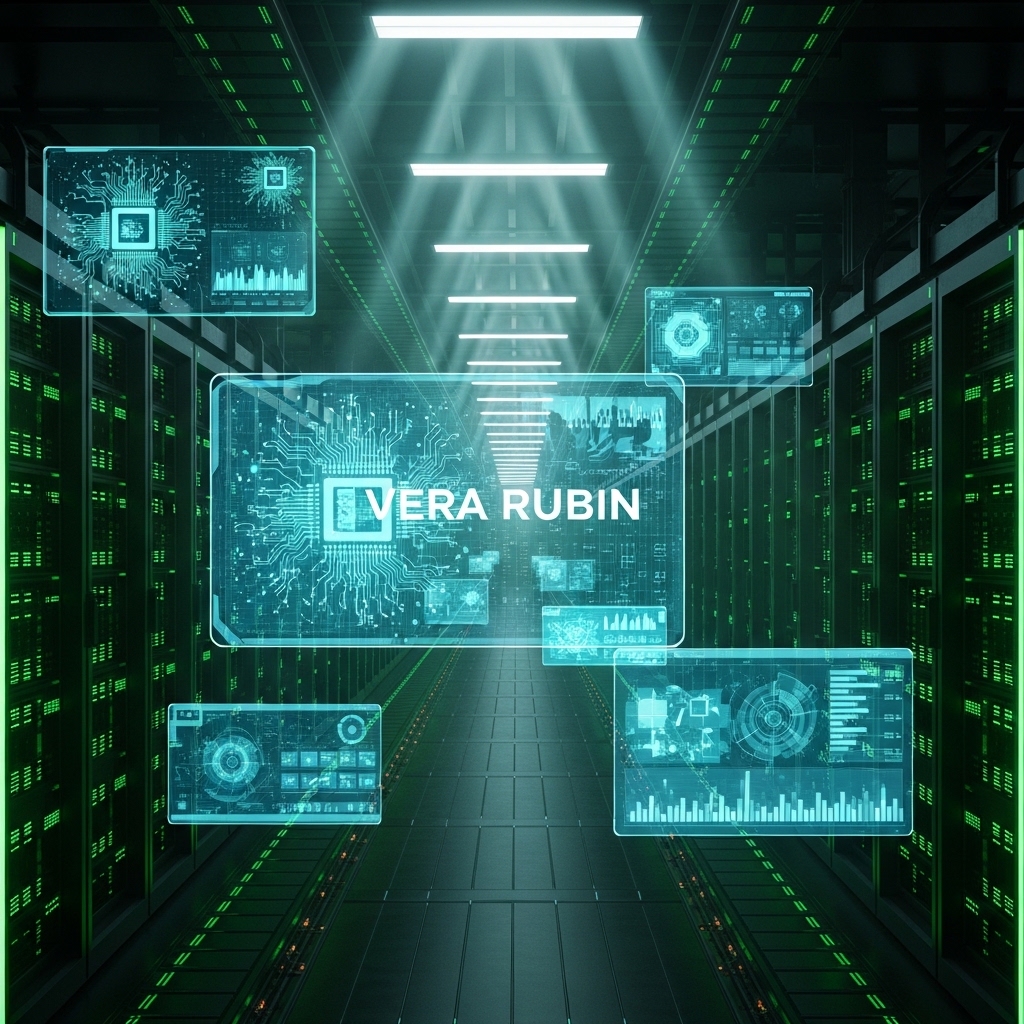
Jensen Huang's GTC keynote wasn't just a product launch — it was a statement of dominance.
The centerpiece: Vera Rubin, NVIDIA's next-generation full-stack computing platform. Seven new chips. Five rack-scale systems. One supercomputer. All designed for one thing: agentic AI at scale.
The numbers are staggering. NVIDIA now sees $1 trillion in orders for its Blackwell and Vera Rubin systems through 2027 — up from $500 billion just last quarter. The Vera Rubin architecture pairs new Rubin GPUs with Vera CPUs and the brand-new Groq 3 LPX inference accelerator, which NVIDIA claims delivers up to 35x higher inference throughput per megawatt.
But the software story might be even bigger. NVIDIA launched NemoClaw — an open-source AI agent stack that Jensen compared to "Linux and Kubernetes" in importance. The name? Directly inspired by OpenClaw, the open-source AI agent framework that went absurdly viral in China earlier this month.
Jensen also noted that 100% of NVIDIA is now using Claude Code for development, alongside other models. Let that sink in. The world's most valuable company is building its chips using someone else's AI.
And scattered across the conference floor: 110 robots, including a Disney Olaf that walked and talked. Physical AI isn't a demo anymore — it's a product category.
The takeaway: NVIDIA isn't selling chips. It's selling the infrastructure layer for the entire AI economy. And right now, no one else is even close.
2. DLSS 5 Launches. Gamers Immediately Call It an "AI Slop Filter."

DLSS has been one of NVIDIA's biggest success stories — AI upscaling that makes games look better while running faster. DLSS 4 was widely praised. DLSS 5 was announced at GTC.
And within minutes, the internet turned on it.
The problem? DLSS 5 doesn't just upscale anymore. It uses generative AI to add "photorealistic lighting" and infer how game scenes should look. In practice, that means character faces get subtly (and sometimes not-so-subtly) altered. Players immediately noticed characters looking smoother, more idealized — like Instagram beauty filters had been applied to their favorite games.
The term "AI slop filter" started trending on social media within an hour of the reveal. Side-by-side comparisons flooded Reddit. Gamers accused NVIDIA of overwriting game developers' artistic vision with generic AI beauty standards.
Jensen's response? He told Tom's Hardware that gamers are "completely wrong" and insisted developers retain "artistic control." He compared it to how film directors use color grading — a tool, not a mandate.
The gaming community was not convinced.
The takeaway: AI is incredible at making things look "better" by its own standards. The question gamers are asking — correctly — is: better according to whom? When your AI "improvement" makes every character look like the same AI-generated face, you've crossed from enhancement into homogenization. This is the "AI slop" debate distilled into a single feature.
3. A Ghost Model Called "Hunter Alpha" Appeared on OpenRouter. No One Knows Who Made It.
On March 11, a model called Hunter Alpha appeared on OpenRouter — the popular AI model routing platform — with no attribution, no documentation, and no creator listed.
Developers tested it. And immediately started asking questions.
The model is massive — an estimated one trillion parameters. It demonstrated multimodal capabilities, sophisticated reasoning, and performance that rivaled frontier models. A companion model called Healer Alpha appeared alongside it.
The internet's consensus: this is DeepSeek secretly testing V4.
The evidence was circumstantial but compelling — the parameter count matched rumors, the capabilities aligned with leaked specifications, and DeepSeek had been suspiciously quiet since its January blockbuster. A full V4 launch is reportedly planned for April.
But Reuters threw cold water on the theory. Independent benchmark tester Umur Ozkul analyzed the model's behavior and concluded "Hunter Alpha is likely not DeepSeek V4", citing differences in tokenization patterns and architecture compared to DeepSeek's existing systems. The model also showed stronger censorship and weaker math performance than previous DeepSeek releases — not what you'd expect from a frontier upgrade.
So who made it? Nobody knows. And that's the most interesting part.
The takeaway: We've entered an era where trillion-parameter AI models can appear anonymously on public platforms, and nobody can figure out who built them. Whether this is DeepSeek, a state actor, or some well-funded lab running shadow tests, the fact that this is even possible should give everyone pause. The barriers to building frontier AI are dropping faster than anyone predicted.
4. The Pentagon Called Anthropic an "Unacceptable National Security Risk." The Entire Tech Industry Responded.
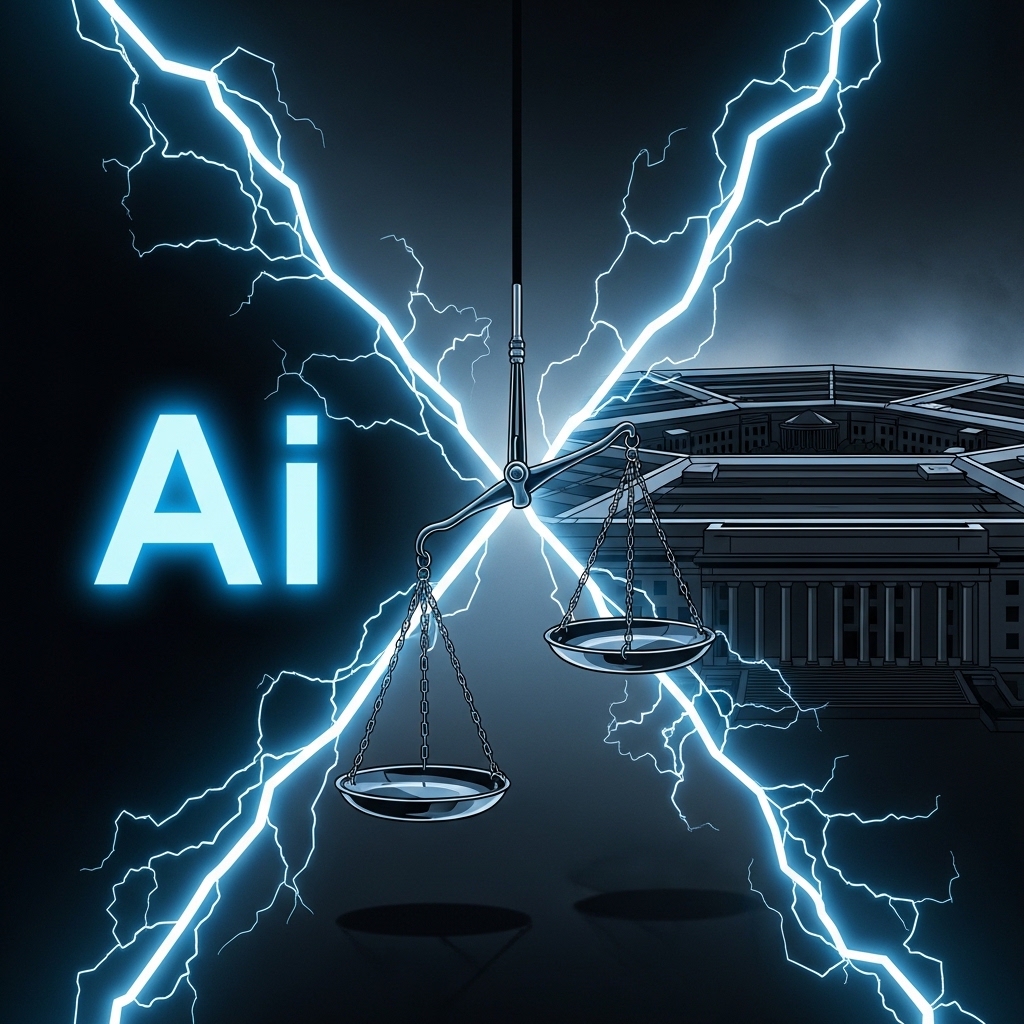
The Anthropic vs. Pentagon saga escalated from corporate dispute to full-blown constitutional crisis this week.
Here's the timeline: The Pentagon wanted to use Claude in "all lawful" military applications. Anthropic drew two red lines: no autonomous weapons, no mass surveillance of American citizens. Negotiations collapsed. On March 4, Defense Secretary Pete Hegseth designated Anthropic a "supply chain risk to national security" — effectively blacklisting the company from all government contracts.
Anthropic filed two lawsuits on March 9. A hearing was scheduled for April 3. The judge moved it up to March 24 — a sign of how serious this is.
Then the industry rallied.
Microsoft filed an amicus brief supporting Anthropic. 37 engineers and researchers from OpenAI and Google — including Google's chief scientist Jeff Dean — filed briefs too. Former federal judges submitted their own filings raising concerns about the Pentagon's use of the supply chain risk designation.
Think about that. OpenAI, Google, and Microsoft — Anthropic's direct competitors — are publicly backing the company against the U.S. military. This isn't about market share. It's about precedent.
If the government can label any AI company a national security risk for refusing to remove safety guardrails, every company in the industry is vulnerable. The message to every AI lab would be clear: comply with every government request, or lose access to the most lucrative contracts on Earth.
The takeaway: Anthropic is fighting for something bigger than a $200 million contract. It's fighting for the principle that AI companies can say "no" to governments. The fact that its competitors are backing it tells you everything about what's at stake.
5. Donald Knuth Named a Paper After Claude. Because It Solved a Problem He Couldn't.
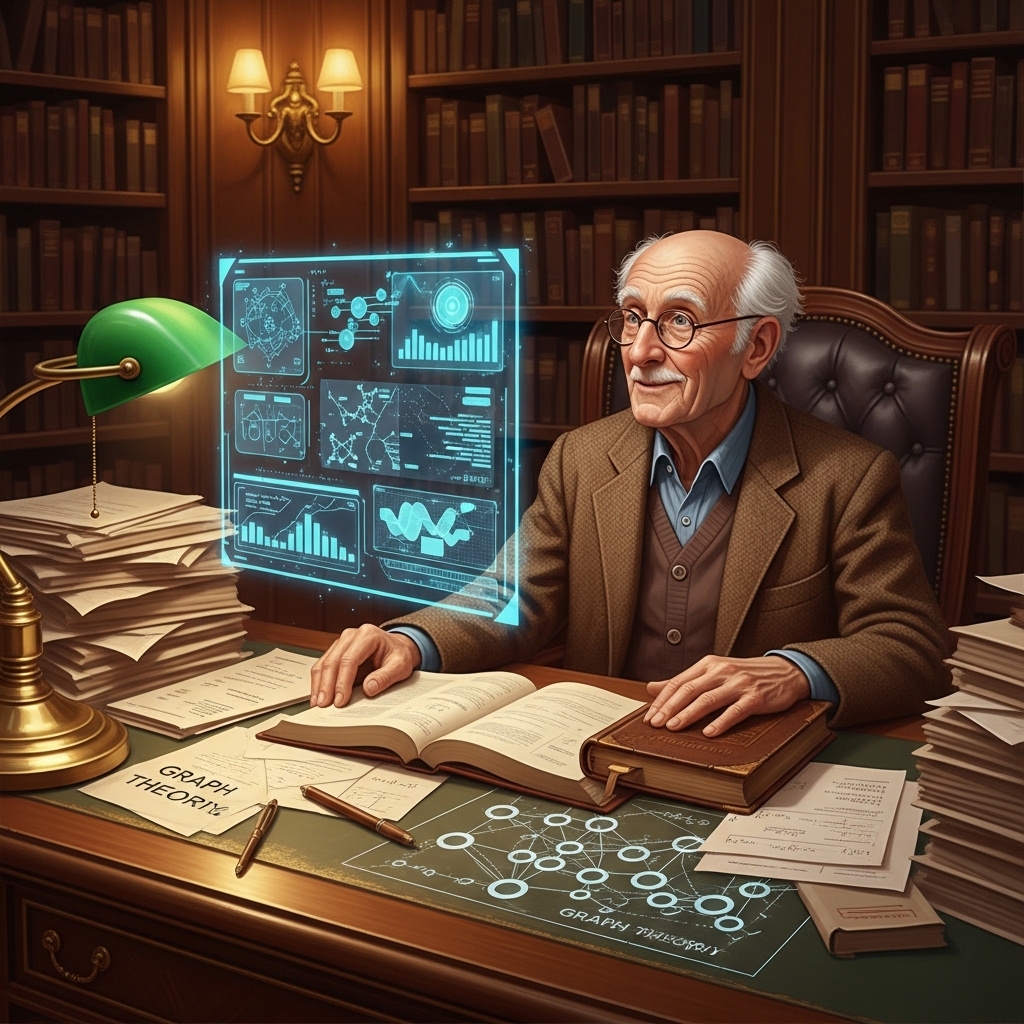
If you don't know who Donald Knuth is, here's the short version: he's the godfather of computer science. Author of The Art of Computer Programming — the most important series of books in the field. Creator of TeX, the typesetting system that every academic paper uses. He's 88 years old and still publishing.
He's also not an AI hype guy.
So when Knuth published a paper titled "Claude's Cycles" that opens with the exclamation "Shock! Shock!" — the computer science world paid attention.
Here's what happened: Knuth had been working on a complex graph theory problem — specifically, constructing Hamiltonian cycles in a 3D directed graph — for weeks. He was stuck. So he tried Claude Opus 4.6.
Across 31 guided explorations over roughly one hour, Claude independently recognized the problem's underlying structure as a Cayley digraph from group theory and cracked it. Knuth wrote the formal proof himself, but credited Claude with the key insight.
He titled the paper after the AI.
The math community's reaction was mixed. Some celebrated it as proof that AI is a useful research tool. Others worried about what it means when the greatest living computer scientist can't solve something that an AI handles in an hour.
The takeaway: This isn't about AI replacing mathematicians. Knuth himself said Claude is a "useful tool." But the era when humans held a monopoly on mathematical insight is officially over. AI didn't replace Knuth — but it saw something he couldn't. That's a different kind of revolution.
6. The AI Revenue War Is Getting Real: Anthropic $19B, OpenAI $25B, and Google Is Quietly Winning

While everyone was watching GTC and the Pentagon drama, the real story might be in the revenue numbers.
Anthropic has nearly doubled its annualized revenue to $19 billion, up from $9 billion at the end of 2025. According to Axios, the company is "turning the tables on OpenAI" in enterprise revenue — the most important revenue category because enterprise customers are stickier and more profitable than consumers.
OpenAI says it's on pace for $25 billion this year. Still in the lead, but the gap is closing fast.
But here's the number nobody's talking about: Google Gemini grew 258% year-over-year in paid subscribers, outpacing Claude's 200% growth. While OpenAI and Anthropic battled in court and in headlines, Google quietly expanded through something unsexy but powerful: distribution. Gemini is already in Gmail, Docs, Sheets, Android. It's in the tools people already use every day.
Both OpenAI and Anthropic are reportedly considering IPOs as soon as this year. Reuters and the Financial Times have both reported on the plans. The era of AI labs burning through private capital may be ending — not because investors lost faith, but because these companies are finally generating enough revenue to go public.
Meanwhile, Anthropic's court filings revealed a telling detail: lifetime sales "exceeding $5 billion" compared to its touted $19 billion "run rate." Reuters called this an example of "AI revenue hallucination" — the gap between what companies have actually earned and what they project based on recent monthly numbers.
The takeaway: The AI industry is printing real revenue now — but the numbers are murkier than they look. "Annualized run rate" is marketing, not accounting. Watch the actual earnings when IPO filings drop. That's when we'll see who's really winning.
7. Mistral Launches "Forge" — Build Your Own AI, Keep Your Own Data

While the American AI labs were fighting over Pentagon contracts and consumer subscriptions, a French company quietly made what might be the smartest enterprise play of the year.
Mistral AI launched Forge at GTC — a platform that lets enterprises build custom AI models trained entirely on their own data, running on their own infrastructure.
The pitch is simple: Why send your proprietary data to OpenAI or Anthropic when you can train your own model that never leaves your servers? In a world where AI safety debates center on data privacy and government access, "your data stays yours" is suddenly the most compelling sales pitch in enterprise AI.
Mistral is on track to surpass $1 billion in annual recurring revenue this year. That's a fraction of what OpenAI or Anthropic make, but Mistral is profitable (or close to it) and growing fast in exactly the market segment that matters most: enterprises that can't or won't trust American AI labs with their data.
The timing couldn't be better. The Anthropic-Pentagon fight has every corporate general counsel asking: "If the U.S. government can pressure AI companies to hand over capabilities, what happens to our data?"
The takeaway: Mistral isn't trying to build the smartest model. It's trying to build the model you own. In a post-Anthropic-Pentagon world, that might be worth more than benchmarks.
The Bottom Line
GTC week wasn't just about chips and keynotes. It was about the fracture lines in the AI industry becoming impossible to ignore.
NVIDIA is building the hardware layer for everything. Anthropic is fighting the U.S. government over principles. OpenAI is racing toward an IPO. Google is winning through distribution. Mistral is betting on sovereignty. DeepSeek (maybe) is shadow-testing trillion-parameter models. And an 88-year-old computer science legend just named a paper after an AI that outsmarted him.
The AI industry is no longer a research project. It's a geopolitical chess match with trillion-dollar stakes, and every move this week proved it.
See you next time. Try not to blink — you'll miss three model launches and a lawsuit.
Follow me for weekly AI analysis that cuts through the noise. No hype, no filler — just what actually matters.